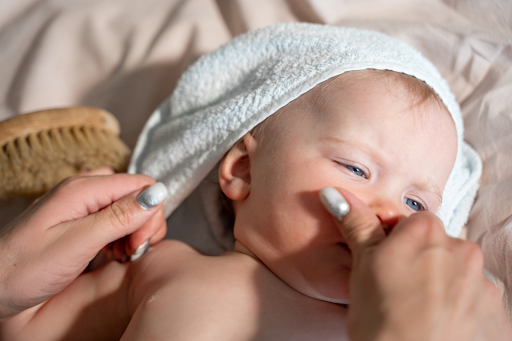
When people say allergy, they often mean any reaction to a food, formula, medication, or environment. Clinically, allergy refers to an immune response that misidentifies something harmless as a threat. The most recognized type is IgE-mediated allergy, which can cause hives, swelling, vomiting, wheeze, or in severe cases anaphylaxis. Newborns can also have non–IgE-mediated allergies, which act more slowly and mainly affect the gut or skin. Separate from both is intolerance, in which the body struggles to digest or handle a substance without the immune system being the main driver. Understanding which bucket your baby’s reaction belongs to guides the next steps.
True allergy is less common in the immediate newborn period than later in infancy, but it does occur. Newborns can react to proteins in cow’s milk–based formula, to dietary proteins that pass into breast milk, to medications, or to topical products on the skin. Seasonal allergies rarely show up in the first year because repeated pollen exposures are needed to “train” the immune system; that sensitization process takes time. The most frequent allergy patterns we see in early infancy are cow’s milk protein allergy (both IgE and non-IgE forms), eczema with allergic features, and occasionally reactions to soy, egg, or peanut once complementary feeding begins later.
A newborn’s immune system is still under construction. They carry maternal antibodies for limited protection and gradually build their own responses. Mucosal barriers in the gut and skin are more permeable than in older children, and the skin barrier may be fragile in some families. That combination makes the presentations skew toward skin and digestive symptoms: rashes, fussing with feeds, vomiting, diarrhea, mucus or small streaks of blood in stools, and poor weight gain. Respiratory allergy symptoms like itchy eyes and sneezing are uncommon in the first months and more likely to be viral if they appear.
IgE-mediated allergy is the rapid-onset kind. Minutes to two hours after exposure, you might see hives, flushing, swelling of lips or eyelids, repetitive vomiting, cough, wheeze, or sudden lethargy. Non–IgE-mediated allergy acts on a slower clock. Typical examples are cow’s milk protein allergy with blood-streaked stools or significant reflux-like irritability, and FPIES (food protein–induced enterocolitis syndrome), which presents as delayed repetitive vomiting and pallor a couple of hours after a trigger feed without hives or wheeze. Intolerance includes lactase deficiency, excessive gas from certain formulas, or sensitivity to additives. Symptoms tend to be limited to the gut, without hives or respiratory involvement, and the severity often scales with the amount consumed.
Yes, though it is not the default. Small amounts of dietary proteins cross into breast milk. Most babies tolerate them without issue. A minority will have symptoms that improve when a specific food is removed from the lactating parent’s diet and return with reintroduction. Cow’s milk protein is the top suspect when symptoms fit: fussing during or after feeds, frequent spitting up, back-arching, gassiness, eczema flares, and in some cases mucus or blood flecks in the stool. Because elimination diets can be burdensome and may affect nutrition, it’s best to trial them in a targeted, time-limited way with clear goals and planned re-challenge.
They can react to the proteins in standard cow’s milk–based formulas. Some will also react to soy-based formulas. The stepwise approach is to change the protein structure the immune system sees. Extensively hydrolyzed formulas break proteins into smaller fragments that many babies with cow’s milk protein allergy tolerate. A subset needs amino acid–based formulas in which proteins are fully broken down to their building blocks. Switching too quickly between multiple formulas can muddy the picture, so plan one change at a time, allow 2 to 3 weeks for assessment unless symptoms are severe, and track feeds, stools, and comfort systematically.
Eczema (atopic dermatitis) commonly begins in early infancy and reflects both skin-barrier vulnerability and immune tendencies. It often appears as dry, red, itchy patches on the cheeks, scalp, and extensor surfaces. While eczema is not caused solely by food allergy, the two can intersect. A flaring, sleep-disrupting rash that does not respond to basic care deserves a targeted skin plan and a discussion about whether food exposure is worsening the cycle. Contact dermatitis, by contrast, is an irritant or allergic reaction to something that touches the skin: fragranced wipes, detergents, wool fabrics, or topical products. Hives are raised, itchy welts that can follow a new food, medication, or infection; isolated hives without other symptoms are less worrisome than hives plus vomiting, cough, or swelling.
The gut is often where newborn allergy speaks loudest. Red flags include persistent fussing with feeds, projectile or repetitive vomiting, diarrhea that does not improve with routine care, stools with mucus or small blood streaks, and faltering weight gain. Patterns matter more than one-off episodes. A baby who occasionally spits up and otherwise feeds well and gains weight is likely normal. A baby who arches, refuses feeds, and has loose, mucousy stools most days needs a closer look. Distinguishing reflux, colic, transient lactose overload, and infection from allergy requires careful history, growth data, and response to time-limited trials.
Nasal stuffiness, cough, and sneezing are very common in young infants and usually reflect colds, dry air, or normal newborn congestion, not environmental allergy. True environmental allergy generally requires multiple seasons of exposure. That said, some airborne exposures can irritate newborn airways independent of classic allergy, notably tobacco smoke and strong fragrances. Reducing irritants is part of sound care regardless of allergy status. If breathing effort increases, feeding becomes difficult, or there is wheeze, stridor, retractions, or color change, seek immediate care; those are not typical allergy-only findings in a newborn.
Allergy risk runs in families, but not in a simple one-to-one way. If one parent has allergic conditions (eczema, food allergy, asthma, or allergic rhinitis), the infant’s risk is higher than baseline; if both do, the risk is higher still. Which condition shows up can differ among family members. A family history informs vigilance and prevention strategies but does not predetermine outcomes. We still prioritize normal development, safe sleep, and responsive feeding rather than imposing restrictive environments based solely on risk.
First, define the problem precisely. What happened, how soon after exposure, how long did it last, and what else was going on? Second, map the exposure. Was there a new formula, a change in lactating parent’s diet, a medication, a topical product, or a new laundry detergent? Third, look for multi-system involvement. Hives plus vomiting and cough after a formula bottle is different from mild spit-up after every feed. Fourth, decide the smallest next step that yields the most diagnostic information with the least disruption. That might be pausing a suspect formula for a controlled trial of an extensively hydrolyzed option or, for breastfed infants, a time-limited maternal dairy elimination with planned reintroduction.
Testing is most useful when results change management. Skin-prick testing and serum specific IgE tests can support a diagnosis of IgE-mediated allergy, but they must be interpreted in context; positive tests without a convincing history can lead to unnecessary restriction. For non–IgE-mediated conditions, tests are often unhelpful; diagnosis leans on history and response to elimination and re-challenge. The gold standard for confirming food allergy is a supervised oral food challenge, which is rarely performed in the immediate newborn period unless the history is clear and the benefit outweighs the stress. Your clinician will weigh severity, growth, and family burden when deciding whether to test now or to proceed with a structured trial.
If symptoms suggest cow’s milk protein allergy, a reasonable plan in a formula-fed newborn is a switch to an extensively hydrolyzed formula with careful monitoring of symptoms, stools, and weight over 2 to 3 weeks. If symptoms persist or are severe, an amino acid–based formula may be recommended. In a breastfed newborn, a 2- to 4-week maternal dairy elimination trial may be appropriate when the history fits, coupled with nutrition guidance to maintain adequate calcium, vitamin D, iodine, and overall energy intake. The key step is re-challenge. If reintroduction restarts the same pattern, the association is more convincing and the plan clearer.
Daily gentle bathing followed by liberal application of a plain, fragrance-free emollient is foundational. Thicker creams or ointments work better than lotions for barrier repair. Identify and remove irritants: scented detergents, fabric softeners, wool against the skin, and fragranced soaps. For flares, short courses of low-potency topical corticosteroids used correctly can rapidly calm inflammation and improve sleep and feeding. Treating eczema well often reduces the confusing overlap with food-related symptoms by removing a constant source of itch and stress.
True allergic reactions to medications can occur, though most newborn exposures are limited. Rash, hives, swelling, vomiting, or breathing difficulty soon after a medication deserves immediate attention. Delayed rashes after antibiotics are frequently non-allergic or infection-related but should still be documented. If a medication allergy is suspected, your clinician will record details and plan either avoidance, graded re-exposure later, or referral. Do not re-challenge at home without explicit guidance.
Newborns receive early vaccines that prevent severe infections. Allergic reactions to vaccines are rare. A strong family history of allergy is not a reason to delay routine vaccines. If your baby has had a prior immediate reaction to a vaccine component or has a complex allergy history, your care team can plan observation in the clinic after immunization. The protection vaccines offer is especially important in early life when infections can be dangerous.
Smoke-free environments protect infant airways and reduce infections. Gentle, fragrance-free products reduce skin and airway irritation. Regular cleaning to reduce dust and pests can help families with known sensitivities. Pets are often safe to keep; abrupt rehoming has social and emotional costs and does not guarantee prevention. Instead, manage dander with vacuuming and handwashing and keep pets off sleeping surfaces. Comfortable indoor humidity supports skin and airway health.
Prevention guidance has shifted toward deliberately introducing major food allergens during infancy rather than delaying them, especially peanut and egg, because early introduction can reduce the risk of developing allergy. That timing typically begins around 4 to 6 months when a baby shows feeding readiness, not in the immediate newborn period. If your newborn has had convincing allergic reactions or has severe eczema, your clinician may recommend an individualized introduction plan as you approach readiness, sometimes with testing or supervised feedings for higher-risk infants.
Case 1: A 3-week-old, exclusively breastfed, has daily mucus-streaked stools and cranky feeds. Growth is steady. There are no hives or wheeze. The most likely mechanisms are non–IgE-mediated cow’s milk protein allergy or transient postpartum lactose overload. Because growth is good and symptoms are moderate, a time-limited maternal dairy elimination with clear goals is reasonable. If stools normalize and fussing declines, reintroduce dairy to confirm the link. If there is no change, end the diet and consider other causes such as feeding mechanics, air swallowing, or infection.
Case 2: A 2-week-old on a standard cow’s milk formula develops hives and repetitive vomiting within 30 minutes of a bottle after doing well on a different brand earlier. This rapid, multi-system pattern raises concern for IgE-mediated allergy. Immediate care focuses on stabilization if symptoms are ongoing; longer-term, a switch to an extensively hydrolyzed formula is appropriate and referral for evaluation may be made. If there is any breathing change, lethargy, or ongoing vomiting, emergency care is indicated. Document the exact formula and lot, timing of symptoms, and response to care.
Case 3: A 5-week-old with severe eczema disrupting sleep and feeding. No clear food link, formula is tolerated. The priority is skin repair. Begin an intensive emollient plan, remove irritants, and use a short course of appropriate topical anti-inflammatory medication for flares. Only if the rash remains severe despite optimal skin care should a focused dietary trial be considered, and then with re-challenge to avoid unnecessary long-term restriction.
Case 4: A 10-day-old with nasal congestion and sneezing in a household with a seasonal pollen surge. Environmental allergy is unlikely this early; viral infection or normal newborn congestion is more plausible. Supportive care, humidification, nasal saline, and monitoring of feeds and breathing effort are appropriate. If feeding or breathing is affected, seek care. Allergy testing for pollens would not be informative in a newborn.
Track patterns for 3 to 5 days: feeds, volumes or durations, stool frequency and characteristics, rashes, and behaviors. This log is your decision tool. Simplify exposures: avoid switching multiple variables at once. If you are trialing a new formula, keep everything else steady. If you are trialing a maternal elimination, change that one factor only. Protect growth: prioritize adequate calories and hydration; growth is the signal we respect most. Care for the skin barrier daily. Use fragrance-free products everywhere. Set check-in points with your pediatrician so changes do not drift without reassessment.
Hard-to-wake baby, poor feeding with signs of dehydration, repetitive or projectile vomiting with lethargy, blood in stool that is more than faint streaks or is persistent, breathing effort, color change, swelling of lips or tongue, widespread hives with vomiting or cough, or any rapid decline in responsiveness. When in doubt, seek care; babies can tire quickly, and early evaluation is protective.
Do not remove multiple food groups for long periods without guidance; you can create nutrition problems and still miss the real cause. Do not stack new formulas every couple of days; you will not know what helped. Do not rely on over-the-counter remedies or home tests that are not validated for newborns. Do not assume every cry or spit-up is allergy; newborns are noisy, leaky creatures, and normal physiology produces a lot of harmless symptoms.
Every plan balances symptom relief, growth, parental bandwidth, and diagnostic clarity. For mild, non–IgE patterns with good growth, we favor minimal-change trials and careful observation. For rapid-onset, multi-system reactions, we escalate promptly, secure safe nutrition, and consider referral. For eczema-dominant patterns, we treat the skin like the essential organ it is and avoid reflexive diet changes unless the history supports them. We also consider siblings, work schedules, and cooking realities so the plan you get is one you can actually follow.
No. They can react to specific proteins that pass into breast milk from the lactating parent’s diet, most notably cow’s milk protein, but not to human milk as a category. If symptoms suggest food protein sensitivity, a short, targeted elimination with planned reintroduction may clarify the link while you maintain nutrition and milk supply.
No. Anal fissures from firm stools, swallowed blood from cracked nipples during breastfeeding, and infections can also cause blood streaks. In non–IgE cow’s milk protein allergy, you might see small, intermittent red streaks with mucus and irritability that improve with an appropriate formula or a maternal diet trial. Any persistent or copious blood needs prompt evaluation.
Evidence is mixed. Some strains show small benefits for eczema risk in specific settings, but probiotics are not a universal fix and strains matter. They can be considered in targeted scenarios, especially for skin-dominant patterns, but the main pillars remain skin-barrier care, appropriate nutrition, and sensible introduction of solids later in infancy when developmentally ready.
Delaying beyond typical readiness does not prevent allergy and may miss a window of benefit for certain foods. Most infants start complementary foods around 4 to 6 months when they show readiness cues. In higher-risk infants or those with prior reactions, plans for introducing peanut and egg may include testing or supervised feedings; that conversation happens as you approach readiness, not in the immediate newborn period.
Lactose intolerance is difficulty digesting the milk sugar lactose and is very rare as a congenital condition. Cow’s milk allergy is an immune reaction to milk proteins (casein and whey) and is far more relevant to early infancy. Allergy can be IgE-mediated with rapid hives and vomiting or non–IgE with delayed gut symptoms. The management focuses on protein modification or elimination, not lactose removal, unless your clinician has identified a specific enzymatic issue.
Newborns can have allergies, but their biology shapes how those allergies show up and how we should respond. The highest-yield moves are precise history, small deliberate changes, protection of growth and the skin barrier, and clear reassessment points. Most babies with suspected allergy will find relief with targeted, stepwise adjustments and time. For complex cases, worrisome symptoms, or parental overwhelm, individualized care matters more than ever. If you would like a tailored plan or have concerns about feeding, skin, or reactions in your newborn, we are here to help. Contact us today.