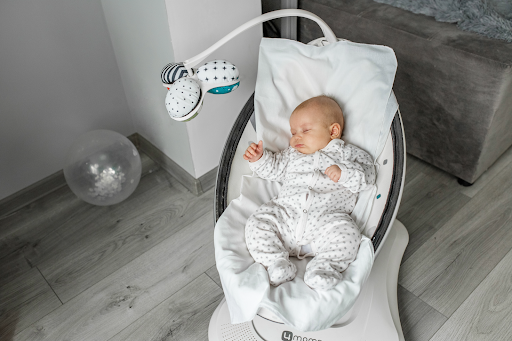
No. A newborn should not sleep in a swing. Safe sleep means placing baby on the back on a firm, flat, level surface with a fitted sheet and nothing else in the space. Swings, bouncers, car seats outside of travel, loungers, and other inclined devices are for supervised awake time only. If your baby falls asleep in a swing, stop the motion and transfer to a flat sleep surface as soon as possible. The goal is not zero motion in your life; it is motion for soothing, flat-and-back for sleep.
Newborns have heavy heads, soft airways, and limited neck control. In a semi-upright or curved seat, the chin can tip toward the chest, narrowing the airway and increasing the risk of positional asphyxia. Soft, contoured sides can trap exhaled air near the face, raising rebreathing risk. Straps are designed to prevent falls, not to position the airway safely for sleep. Prolonged sleep in equipment also delays practice on a flat surface, making later crib transfers harder just when babies start to roll and need even clearer sleep environments.
Continuous motion and a snug contour promote deep, quiet sleep. That is exactly why it is unsafe for unattended sleep. Deep sleep can blunt arousal responses that normally act as a safety net. Instead of changing the position, change your inputs so the crib or bassinet becomes workable: better timing, a short wind-down, and layered, low-effort soothing that you can repeat every time.
Notice the doze, stop the motion, and check that the chin is not on the chest. Support the head and neck, and transfer to a crib or bassinet that is firm, flat, and level. Lay baby on the back. Recreate your cues quickly: turn on white noise, dim lights, place a calm hand on the chest for 15 to 30 seconds. If there is brief fussing with eyes closed, wait 30 to 60 seconds to see if baby resettles. If not, add one soothing layer at a time rather than restarting the swing.
Babies seek motion, pressure, and predictable sensory input. You can provide those safely without equipment.
Rock in arms, sway in a chair, or walk until drowsy, then pause motion for 10 to 15 seconds before transferring so the brain does not expect nonstop movement. If baby stirs on set-down, place your palm gently on the chest for a short count and let white noise do the steady work.
Use a snug swaddle with free hips until the first signs of rolling. Then transition to an arms-out sleep sack so you keep warmth and gentle containment without loose bedding. Avoid weighted products unless specifically advised by your clinician.
Use steady, non-patterned white noise at a moderate volume to mask household sounds and help bridge light-sleep transitions. If your family uses a pacifier, offer it at the start of sleep only, with no cords, clips, or plush attachments in the sleep space, and do not reinsert after your baby is already asleep.
Most failed crib transfers are timing problems, not crib problems. Aim for age-appropriate wake windows, usually 45 to 90 minutes for many newborns. Build a five to ten minute wind-down that always looks the same: diaper, sleep sack, lights down, white noise on, short song or hum, then into the crib on the back. Keep nights boring. Dim light, minimal chatter, quick diaper changes, and right back down. The more predictable you are, the more your baby learns what will happen next, which lowers arousal and cuts the need for high-powered motion.
Inclines feel comforting for gassy or refluxy babies because upright positioning reduces symptoms while you are holding them. That comfort does not translate safely to unattended sleep. Keep sleep flat and back-lying. Use upright holding for ten to twenty minutes after feeds, burp mid-feed and at the end, and if your clinician suggests it, try smaller, more frequent feeds. When you discontinue swaddling at rolling signs, continue warmth and comfort with an arms-out sleep sack rather than propping or padding the sleep surface.
You do not need to abandon all motion today. Think practice reps.
Keep whatever gets you through the day, but choose the easiest nap for a daily crib practice. End on a win. If you get ten to fifteen minutes, celebrate and pick it up at the next opportunity. Skills do not arrive all at once; they accrue with repetition under the same, simple conditions.
Soothe in arms until breathing slows and movements soften. Pause the motion for a slow count before transfer, then set baby down feet first, then back and head, and hold your hand on the chest for a brief count. This helps the nervous system bridge the change from moving to stillness.
Use light and social patterns to hint at time of day. After the first morning wake, open the blinds for natural light exposure. During the day, feed in bright spaces and let normal household sounds happen. In the evening, lower the lights and stimulation. At night, keep the environment calm and consistent. These cues shape circadian rhythm over weeks, reducing the perceived need for constant motion as the only path to sleep.
Life requires flexibility. Car seat sleep during travel is expected, but once the trip ends, move your baby to a flat sleep surface. For stroller naps, choose a recline that is truly flat if your model allows, check airway posture frequently, and transfer when you can. The rule of thumb is motion for soothing while you supervise, flat and back for sleep when you are not actively attending.
Late preterm infants and babies with low birth weight can be sleepier and feed less efficiently at first, making long motion naps particularly tempting. In those cases, your clinician may advise scheduled wakings to protect intake and growth. If reflux is severe, if spit-up is forceful or painful, or if growth is affected, we will tailor a plan that may include feeding adjustments and additional supports. If your baby has a medical condition that would change positioning for sleep, you will receive specific written instructions about how and when to apply those changes.
Safe sleep only works if the caregivers can sustain it. Trade shifts with a partner or trusted helper when possible. Set up a small overnight station with diapers, wipes, burp cloths, clean bottles or pump parts, and water so you move less at 3 a.m. Use ten to twenty minute power naps while someone else watches your baby’s safe sleep. If mood symptoms persist or worsen, bring it up at your visit. Your rest, nutrition, and support are protective factors for your baby’s sleep as well.
If baby wakes on transfer, shorten the prior wake window by ten to fifteen minutes, add two minutes of quiet wind-down, and try the drowsy pause plus palm on chest technique. If baby only falls asleep with motion, replace device motion with in-arms rocking, then stop the motion for a brief count before transfer. If nights are chaotic, front-load daytime calories and light exposure, cap the last nap gently, and aim for an earlier bedtime for a week to see if consolidation improves. Keep one easy motion nap for parental recovery if you need it, but continue your daily crib practice so the flat-back skill grows.
Call the same day if your newborn is hard to wake, repeatedly dozes through feeds, has very few wet or dirty diapers for age, develops fever, shows yellowing of skin or eyes, breathes with effort, has a weak cry, or seems limp. Also call if sleep or feeding patterns change abruptly and you cannot maintain intake. We would rather talk early and adjust the plan than have you worry through the night.
Swings can be excellent soothing tools during supervised awake time, but they are not safe sleep spaces. For sleep, keep it simple and repeatable: on the back, on a firm, flat, level surface, in a clear crib or bassinet. Use timing, short routines, gentle motion in arms, white noise, and sleep sacks to make safe sleep doable in real life. If your situation is complex or you feel stuck, reach out for a tailored plan that protects safety and preserves your capacity.
No. Even models with deeper recline are not designed for unattended sleep and may still position the head and neck in ways that narrow the airway. Fabric and padding can also create pockets of exhaled air near the face. Use the swing for calming while you watch, and transfer to a firm, flat, level crib or bassinet on the back as soon as your baby nods off. Build a short, predictable wind-down so you are not relying on continuous motion to maintain sleep.
Start by fixing timing. If baby is wired and flailing, you likely overshot the wake window; try ten to fifteen minutes earlier next time. Use a five to ten minute wind-down, soothe in arms to drowsy, pause motion for a slow count, transfer feet first, then place a calm hand on the chest. Turn on white noise and dim the lights. Practice one crib nap each day and treat ten to fifteen minutes as a win. Repetition, not heroics, grows this skill.
No. Though the shapes differ, they share similar concerns for sleep: curved seats, soft padding, semi-upright posture, and restraint systems not built for safe, prolonged sleep. Reserve them for supervised awake time. For sleep, return to the flat, firm crib or bassinet with a fitted sheet and no extras in the space. If your baby dozes off in any of these devices, stop motion, check airway posture, and transfer as soon as practical.
The incline may feel soothing, but it introduces risks during sleep. Keep sleep flat and back-lying. Support reflux in other ways: upright holding after feeds for ten to twenty minutes, thorough burping, and, if advised, smaller, more frequent feeds. Ensure clothing and diapers are comfortably loose around the abdomen. If reflux is painful, frequent, or affecting growth, your pediatric clinician can tailor feeding strategies and discuss additional options while keeping sleep positioning safe.
Use a stair-step plan. Replace device motion with in-arms rocking. Pause the rocking for ten to fifteen seconds so the nervous system experiences stillness, then transfer to the crib. Add white noise and a short, consistent wind-down. Protect one daily crib practice and keep one easy motion nap for your recovery if you need it. Adjust the prior wake window by plus or minus ten minutes based on baby’s behavior. Most families see measurable progress within a week when timing, routine, and transfer technique are aligned.
Contact us for tailored guidance or to book an appointment: https://www.pakpeds.com/locations