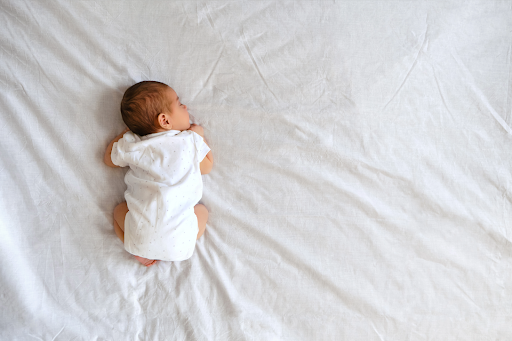
For healthy infants at home, no—a newborn should not sleep on their stomach. The safest position is on the back for every sleep, on a firm, flat, level surface with a fitted sheet and nothing else in the sleep space. Tummy time is important for development, but it belongs in awake, supervised play—never for sleep. If your pediatrician gives a medical exception, you’ll receive specific instructions; otherwise, keep following back-to-sleep every time.
Many new moms have been asking the same question- can a newborn sleep on their stomach? Newborn anatomy and arousal patterns make stomach sleep riskier. Prone positioning can narrow the upper airway, increase rebreathing of exhaled air, and blunt arousal responses that normally help a baby rouse from deep sleep. Back-sleeping keeps airways more open and helps babies arouse when they need to. These physiological differences are why safe-sleep campaigns emphasize supine positioning for every sleep, not just at night or “when convenient.”
That’s exactly why it’s risky. If a position produces unusually deep, unarousable sleep, it can also reduce the body’s built-in safety checks. When you’re exhausted, the temptation to flip your baby is real. Instead of changing the position, change the environment and soothing layers while keeping your baby on the back:
These rules don’t change if your baby is fussy, gassy, or seems to prefer pressure on their belly. We solve comfort needs without compromising safety.
Side sleeping isn’t safe either for newborns. Babies can easily roll from side to stomach, especially on soft or contoured surfaces. Propping with towels or positioners is unsafe and increases the risk of entrapment and suffocation. If your baby falls asleep on their side, gently roll them onto their back on a flat, firm mattress.
“Back-Sleeping Makes My Baby Spit Up”—What Now?
It’s a common worry, but for healthy infants, back-sleeping does not increase choking risk. The airway sits above the esophagus; when on the back, fluids more easily go back down the esophagus rather than into the airway. If reflux is bothersome:
If spit-up is forceful, painful, or interfering with growth, ask your pediatrician for personalized strategies.
Rolls often emerge around 4–6 months, but timing varies. The rule of thumb:
When in doubt about your baby’s stage, ask us—we’re happy to assess readiness.
Tummy time is essential for motor development and helps prevent flat spots. Start with short, awake, supervised sessions—1–2 minutes several times daily—and gradually increase. Make it pleasant:
But remember: tummy time is for play, not for sleep.
There are rare medical scenarios where a clinician may recommend a non-supine position. If that applies to your child, you’ll receive explicit, written instructions describing the position, surface, and monitoring plan. Unless you’ve been given clear, individualized directions, the default is back to sleep on a firm, flat surface.
Stomach sleeping may look peaceful, but it removes layers of natural protection. The safest choice—every nap, every night—is back to sleep on a firm, flat surface with a clear crib. Work the comfort tools and routines that help your baby settle without changing the position. As your child grows and begins to roll independently, your pediatrician can help you navigate the next stage safely.
For healthy newborns at home, no. The safest sleep position is on the back for every sleep, on a firm, flat surface with no extra items in the crib. Prone sleep can narrow the airway, increase rebreathing, and blunt arousal—factors linked to sleep-related risks. If a doctor has given your baby a medical exception, follow those instructions closely and ask questions until you feel confident. Otherwise, stick with back-sleeping and use other comfort strategies—swaddle or sleep sack, white noise, and a calm wind-down—to help your baby settle.
Change the inputs, not the position. Try a snug swaddle (until rolling signs) or arms-out sleep sack, steady white noise, darker nights, and a predictable wind-down routine. Offer a pacifier at sleep (no attachments in the crib), and use rhythmic motion to settle before laying down on the back. If gas or reflux seems to drive belly preferences, focus on upright time after feeds and thorough burping. If sleep is still very hard and you’re tempted to use unsafe positions, call your pediatrician so we can troubleshoot together.
No. Side-lying is unstable and can quickly become stomach sleeping—especially on soft or contoured surfaces. Avoid using towels, pillows, or “positioners” to prop a side position; these add entrapment and suffocation risks. If your baby falls asleep on the side, gently rotate them onto their back on a flat, firm surface. Save side-lying for brief soothing holds while awake and supervised. The safest routine remains clear: back to sleep, firm/flat surface, empty crib, and room-sharing without bed-sharing.
It’s a common fear, but back-sleeping does not increase choking risk in healthy infants. The airway sits above the esophagus; when on the back, fluids are more likely to move away from the airway. To reduce discomfort from spit-up, hold baby upright 10–20 minutes after feeds, burp well, and keep the sleep surface flat (no wedges, pillows, or inclined sleepers). If spit-up is forceful, painful, or interfering with growth, let your pediatrician know so we can tailor feeding strategies to your baby’s needs.
You still place your baby on the back. Once your baby can roll both ways independently and consistently, many clinicians consider it acceptable to let them sleep in the position they assume—but only on a clear, flat, firm surface with no swaddle and nothing extra in the crib. Transition out of swaddling at the first signs of rolling, switch to an arms-out sleep sack, and ensure the sleep space stays empty. If you’re unsure whether your baby is ready, ask your pediatrician at the next visit.