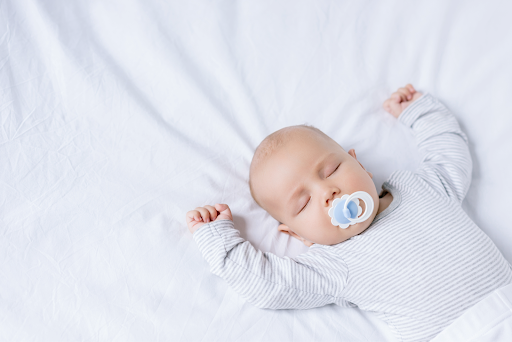
Yes, a newborn can sleep with a pacifier as part of a safe sleep setup. Put the baby on their back on a firm, flat sleep surface (crib or bassinet) with a fitted sheet and no loose items. Offer the pacifier at the start of sleep; if it falls out once your baby is asleep, you don’t need to replace it. If you’re breastfeeding, many families wait until feeding is well established before introducing one so it doesn’t mask hunger cues. Skip clips, strings, and stuffed attachments in the crib to keep the sleep space clear and safe.
Pacifiers are soothing. Sucking is an innate reflex that helps babies settle and transition into sleep. For many newborns, a pacifier can:
Parents also appreciate that pacifiers are easy to remove once a baby is asleep—much easier than undoing a complicated routine—and can be phased out later with a plan. The key is using the pacifier as one layer in a safe, age-appropriate calming routine, not the only strategy you rely on.
Breastfeeding families: Consider waiting until latch and milk supply are well established—often around the 3–4 week mark—before offering a pacifier for sleep. Early on, your baby’s suck is how they communicate hunger, build supply, and practice feeding skills. A premature pacifier habit may mask hunger or shorten feeds for some infants. If nursing is going smoothly and your pediatric clinician gives the green light, try offering the pacifier at the start of naps and bedtime.
Formula-feeding families: You typically have more flexibility to start earlier, because intake is easily measured. Even so, watch timing: offer the pacifier after a good feed, not instead of one.
Not necessarily. Many families successfully breastfeed and use a pacifier. The trick is timing and intent:
One-piece design: Fewer seams mean fewer places for tears or detachment.
Shield: Wide enough to prevent the entire pacifier from entering the mouth and ideally vented for airflow.
Material: Medical-grade silicone is common, durable, and easy to clean.
Size/shape: There’s no universal “best.” Some babies prefer round, others orthodontic. If one style is repeatedly rejected, try another shape.
Inspection: Check daily for cracks, tears, or sticky surfaces and replace at the first sign of wear.
Plenty of babies decline pacifiers. That’s okay. Try:
If your baby still refuses, don’t force it. Many families do just fine without pacifiers by relying on responsive feeds, consistent routines, and an optimized sleep environment.
Late preterm or low birth weight: These babies may be sleepier and feed less efficiently at first. Your care team might recommend scheduled wakings for feeds. If a pacifier seems to suppress hunger cues, set it aside until intake and weight gain are secure.
Reflux/gassiness: Keeping baby upright after feeds for 10–20 minutes and burping well may reduce discomfort, making the pacifier more effective for settling. Still use a flat, level crib or bassinet for sleep.
Oral anomalies or concerns: Tongue-tie, high palate, or other oral differences can affect both pacifier acceptance and feeding. If you suspect a structural issue, ask your pediatrician for an examination and tailored guidance.
You don’t have to plan the entire wean now, but it helps to know what’s ahead:
Reach out same day if your newborn is hard to wake, feeding poorly, having very few wet/dirty diapers, losing weight, showing fever, yellowing of the skin/eyes, trouble breathing, or a weak cry. Pacifiers should never hide medical red flags. If the pacifier seems to create more problems than it solves—prolonged crying, gagging, or refusal to feed—pause and ask for individualized guidance.
If you’re asking yourself “can a newborn sleep with a pacifier”, a pacifier can be a helpful, safe tool when layered into a broader, age-appropriate sleep routine: back to sleep, firm flat surface, empty crib, and responsive feeding. Time your introduction wisely, keep it clean, skip attachments in the crib, and use it to support good sleep—not to replace calories or comfort from a caregiver. If your baby refuses it, you can still build healthy sleep using light/dark cues, a calm wind-down, and consistent safe sleep practices.
Both can be safe if you follow safe sleep rules: back to sleep on a firm, flat surface with a fitted sheet and nothing else in the crib. A pacifier can be part of that setup and may help some babies settle more easily. What matters most is the environment and your baby’s feeding and growth. Offer the pacifier at the start of sleep, then let it be if it falls out. Never attach strings or plushies in the crib. If your baby refuses, that’s fine—you can still achieve safe, restful sleep without it.
Many families wait until breastfeeding is well established—often by 3–4 weeks—before introducing a pacifier for sleep. This allows time to confirm a comfortable latch, adequate transfer, and steady weight gain. Early in life, the suck reflex drives both feeding and milk supply, so you don’t want the pacifier to mask hunger cues. After feeds are going smoothly, offer the pacifier during the wind-down for naps and bedtime. If you notice fewer wet diapers, prolonged fussiness at the breast, or nipple pain, pause pacifier use and talk with your pediatric clinician.
First, make sure your baby is getting full feeds during the day; hunger masquerades as pacifier “dependency.” At sleep time, offer the pacifier once during wind-down, then keep interactions minimal. If it drops before your baby sleeps, you may re-offer a couple of times while keeping the environment calm. Once asleep, don’t replace it. If you’re popping it back in constantly, try adding or adjusting other soothing layers (swaddle or sleep sack, white noise, shorter wake window). Many babies naturally stop needing the pacifier as maturation and routines settle in.
No. Keep the sleep space empty. Pacifier clips, cords, and plush holders pose strangulation or suffocation risks during unattended sleep. Use a plain, one-piece pacifier with a wide, vented shield for bedtime and naps. During awake time under direct supervision, some parents use a short clip to prevent drops—but remove it before sleep. The safest approach at bedtime is simple: pacifier only, crib or bassinet only, baby on the back. This clear boundary makes your nighttime routine consistent and reduces potential hazards.
Pick a one-piece silicone pacifier with a wide shield and vent holes. Before first use, sterilize according to the manufacturer; then clean with hot, soapy water and let it air-dry. Inspect daily for cracks or stickiness and replace at the first sign of wear. Keep a couple of clean spares ready so you’re not tempted to use a dropped one in the middle of the night. Offer the pacifier at the start of sleep after a good feed, pair it with your wind-down routine, and avoid any attachments in the crib.